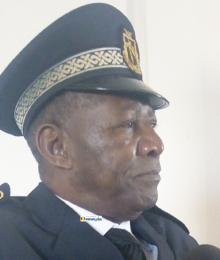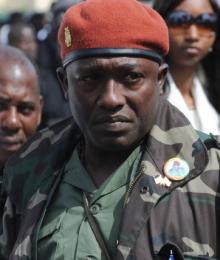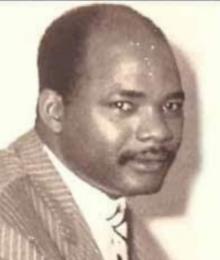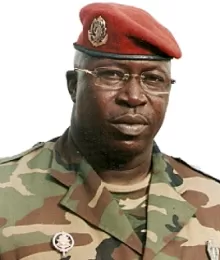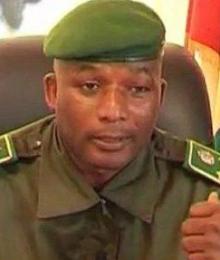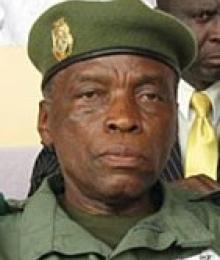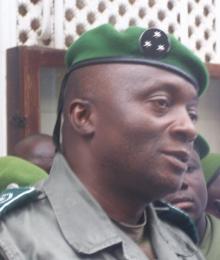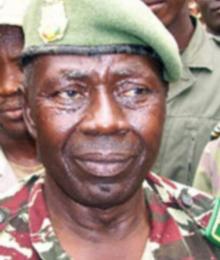



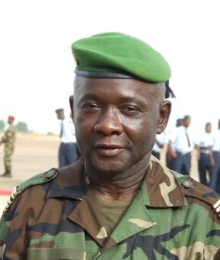
General Nouhou Thiam (died May 17, 2020) was a senior officer in the Guinean army who held the strategic position of Chief of General Staff during the 2010 military transition under the presidency of General Sékouba Konaté. An influential member of the National Council for Democracy and Development (CNDD)—the military junta that seized power in 2008 following the death of President Lansana Conté—he notably distinguished himself in May 2010 by publicly advocating for the army’s neutrality during the presidential elections.
His career took a dramatic turn on July 19, 2011, when he was arrested following the attack on President Alpha Condé’s residence. He spent more than four years in detention under conditions later recognized as abusive by the Guinean judiciary, before being released in March 2016. A diabetic, he passed away at Donka National Hospital in Conakry, leaving behind the image of a controversial officer—both a key player in Guinea’s democratic transition and a victim of the country’s political and military turbulence.
Introduction
General Nouhou Thiam remains one of the most significant and controversial military figures in Guinea's recent history. As Chief of General Staff of the Armed Forces during the military transition period, his career illustrates the political and institutional turbulence that the country experienced between 2008 and 2020.
Rise Within the Guinean Army
Nouhou Thiam climbed the ranks of the Guinean army to reach the rank of colonel, then general. His ascension accelerated after the December 2008 coup d'état, which followed the death of President Lansana Conté. He became an influential member of the National Council for Democracy and Development (CNDD), the military junta that seized power under the leadership of Captain Moussa Dadis Camara.
During the military transition led by General Sékouba Konaté, who succeeded Dadis Camara in 2010, Nouhou Thiam was appointed Chief of General Staff of the Armed Forces. In this strategic position, he held one of the country's most important roles, overseeing all Guinean armed forces in a particularly delicate political context.
Commitment to Army Neutrality
In May 2010, just weeks before the presidential election scheduled for June 27, Colonel Nouhou Thiam made a crucial public commitment before political leaders gathered at the People's Palace in Conakry. He solemnly assured that the Guinean army would remain neutral throughout the electoral process, marking a break with repeated military interventions in Guinean political life.
In his speech, he firmly declared that the defense and security forces would stay away from partisan considerations and respect the choice of the Guinean people. He also affirmed that the army would no longer serve an individual but the entire nation, ending the personality cult that had long characterized the military institution. This stance represented a significant moment in the effort to professionalize and republicanize the Guinean army.
The Chief of Staff went so far as to warn that any misconduct would be severely punished in accordance with the law, and he designated the police and gendarmerie, rather than the army, as responsible for securing the vote. To oversee this delicate mission, interim President General Sékouba Konaté placed him in charge of a special force tasked with securing the presidential elections.
The July 19, 2011 Affair: The Tragic Turning Point
General Nouhou Thiam's trajectory took a brutal turn on the night of July 19, 2011, when the residence of President Alpha Condé, Guinea's first democratically elected president, was attacked with heavy weapons. This attack left one dead and two wounded among members of the presidential guard. Although the president escaped unharmed, the event was characterized as an assassination attempt.
That same day, at ten o'clock in the morning, gendarmerie agents appeared at General Nouhou Thiam's home to arrest him. The former Chief of Staff, who had been dismissed by Alpha Condé shortly after he came to power, immediately became suspected of involvement in this attack. His arrest marked the beginning of a long legal ordeal that would last more than four years.
Detention and Mistreatment
General Thiam's detention conditions quickly raised questions about respect for human rights. According to testimonies collected during the trial, he was allegedly subjected to physical violence from the moment of his arrest. Baba Aliou Barry, former Chief of Staff of the Armed Forces, testified in January 2013 that he witnessed Commander Mory, a presidential guard agent, strike General Nouhou Thiam before his eyes at the PM3 gendarmerie in Matam.
The General was charged with desertion, the accusation based on the fact that he was not at his post at the time of the attack on the presidential residence. His co-defendants were prosecuted for violation of orders within the framework of military discipline. Yet, despite these relatively minor charges in relation to the Guinean Penal Code, which provides for sentences of three months to two years for desertion, General Thiam and his co-defendants remained in pre-trial detention for more than three years without being tried, as the military tribunal supposed to judge them existed only on paper.
Recognition of Abusive Detention
In December 2014, the Kaloum court of first instance recognized the abusive nature of this detention. The court ordered the Guinean state to pay fifty million Guinean francs to General Nouhou Thiam and Colonel Sadou Diallo as damages. The court found that the duration of pre-trial detention far exceeded the maximum sentence provided for by the Penal Code and constituted a serious violation of individual liberty.
This judicial decision, though symbolic according to defense lawyers who had requested one hundred billion Guinean francs, officially established the illegality of the detention. However, despite this recognition, General Thiam and his co-defendants remained incarcerated at the Conakry Central Prison, awaiting the actual construction of the military tribunal or the granting of provisional release.
The Trial and Release
The trial of the six former military officials finally opened in December 2015, in the presence of the Ministers of Justice and Defense. In the dock were General Nouhou Thiam and five other officers, including the former prefect of Dubréka, Lieutenant-Colonel Mamadouba Bondabon Camara. The Minister of Justice, Cheick Sako, called for an exemplary trial in a country seeking to turn the page on military interventions in the political sphere.
On March 3, 2016, after four and a half years of detention, General Nouhou Thiam and his co-defendants finally regained their freedom. The military tribunal found them guilty of desertion and violation of orders during an armed attack, but granted them mitigating circumstances due to their clean criminal records and the fact that the military jurisdiction was operating for the first time. The defendants were sentenced to time already served in prison and one symbolic franc.
New Legal Troubles
General Thiam's release did not mark the end of his troubles with the law. In October 2017, he was again summoned to appear before the Dixinn court on torture charges. Along with other military officials, including the former governor of Conakry, Commander Sékou Resco Camara, he was accused of having tortured, on October 23, 2010, several people at the mobile squadron of the Hamdallaye gendarmerie.
These arrests followed an incident during which the motorcade of General Sékouba Konaté, president of the transition at the time, had been stoned. The victims were mainly merchants and artisans working near the scene of the incident. The trial, opened in February 2018, saw General Thiam and Commander Sékou Resco Camara accused of racism, ethnocentrism, regionalism, abuse of authority, voluntary assault and battery, arbitrary arrests, unlawful confinement, and complicity.
Death and Tributes
General Nouhou Thiam died on May 17, 2020, at Donka National Hospital in Conakry, from complications of diabetes. His death sparked numerous reactions in Guinean military and political circles. The Ministry of National Defense offered its condolences to his biological family and all Guinean armed forces, saluting the man who had been Chief of Staff of the army.
Several political figures paid tribute to General Thiam. The Honorable Aly Kaba, leader of the parliamentary majority, recognized him as one of the army officers who made history. Opposition figure Bah Oury, who himself was a companion in misfortune with the General in legal vicissitudes, described him as a person of integrity. Even Captain Moussa Dadis Camara, former leader of the 2008 junta, expressed his sadness, stating that this death reminded him of the fragility of human existence and the importance of doing good on earth.
Alpha Saliou Wann, another companion in misfortune in the July 19, 2011 affair, delivered a particularly moving testimony about their shared captivity. He revealed that General Thiam had nearly been lynched at PM3, saved at the last moment by the courageous intervention of a young red beret revolted by the mistreatment inflicted on his superior. Wann also emphasized that the authorities pushed cruelty to the point of preventing the General from paying respects to his father's body after he died while the General was in prison, and that until his death, he remained under house arrest.
Burial in Privacy
On May 22, 2020, General Nouhou Thiam was buried at the Cameroun cemetery in Conakry in the strictest privacy. Contrary to custom for high-ranking officers who served the nation, no major official tribute was paid. The absence of military honors for the man who was one of the strongmen of the CNDD regime and Chief of General Staff of the Armed Forces surprised observers, although some sources explained this by health restrictions related to the coronavirus pandemic.
A Controversial Legacy
General Nouhou Thiam's career reflects the contradictions and turbulence of the post-Conté Guinean army. A senior officer who reached the highest levels of the military hierarchy, he embodies both attempts to professionalize the military institution and the persistent difficulties in establishing a truly republican and apolitical army.
His public commitment to army neutrality during the 2010 elections represents an important moment in Guinean political history, even if subsequent events tarnished this legacy. His long detention, recognized as abusive by Guinean justice, testifies to the persistent dysfunctions of the judicial system and tensions within the Guinean security apparatus.
General Nouhou Thiam will remain in collective memory as a complex figure, both an actor in the democratic transition and a victim of the power struggles that followed Alpha Condé's election. His personal story illustrates the challenges that Guinea continues to face in its quest for democratic consolidation and professionalization of its institutions, particularly its army.